The Value of Predictability: Contracting Strategies and Risk Management for RES and BESS in a Highly Volatile Environment


The New Paradigm of Power Market Volatility
The global energy transition has crossed a complex threshold. What was once a predictable, centralized grid dominated by dispatchable thermal generation has transformed into a decentralized, weather-driven ecosystem. Renewable Energy Sources (RES)—predominantly utility-scale solar PV and onshore/offshore wind—alongside Battery Energy Storage Systems (BESS), form the twin pillars of this decarbonized future. However, this transition has introduced unprecedented merchant price volatility, negative pricing intervals, and severe volume risk.
In this high-volatility regime, traditional fixed-price Power Purchase Agreements (PPAs) are undergoing structural evolution. Asset owners, independent power producers (IPPs), and corporate buyers can no longer rely on simplistic linear contracting. At HelioExpect, our advanced analytical modeling demonstrates that asset valuation is dictated less by raw generation volume and more by predictability and flexibility. This comprehensive whitepaper examines advanced contracting strategies, sophisticated risk management frameworks, and optimization methodologies for RES and BESS portfolios.
The Volatility-Risk-Return Triangle for Modern Energy Assets
- Intraday Price Swings: −40% to +150% daily variance across liberalized markets.
- Solar Peak Capture Rates: Often 0 to negative value during peak production hours.
- Contract Horizon Need: Shift from 5-year short-term hedges to 15–20 year structured risk-sharing frameworks.
Deconstructing Volatility: RES Cannibalization and BESS Arbitrage Dynamics
To construct robust contracts, market participants must first understand the root drivers of volatility. The rapid penetration of solar PV creates a phenomenon known as the "Duck Curve" or Cannibalization Effect. When solar generation peaks at midday, wholesale market clearing prices plummet, frequently entering negative territory during high-output, low-demand periods (such as spring and autumn weekends).
Conversely, during evening ramp hours when demand peaks and solar output drops to zero, prices spike exponentially. For standalone solar assets, this means that even if a plant achieves high capacity factors (CF), its realized capture price (Pcap) steadily diverges downward from the baseload average market price (Pbase).
"In a cannibalized market, generating more MWh does not equate to earning more revenue. Value has shifted decisively toward when energy is delivered rather than simply how much."
Real-Life Case Study: The California ISO (CAISO) Midday Collapse
In the CAISO market, over 15 GW of utility-scale solar creates massive midday overgeneration. During spring months, real-time prices routinely drop below -$20/MWh for hours at a time. Solar asset owners operating under unhedged merchant structures find themselves paying the grid to take their electricity. Conversely, evening ramp hours (7 PM to 10 PM) see spot prices spike past $500/MWh. This extreme spread highlights why standalone solar merchant exposure is increasingly unbankable without storage or flexible contracting.
The Mathematical Reality of Capture Rates
The capture price ratio (CR) is defined as the volume-weighted average price received by a generator divided by the unweighted average market price over the same period:
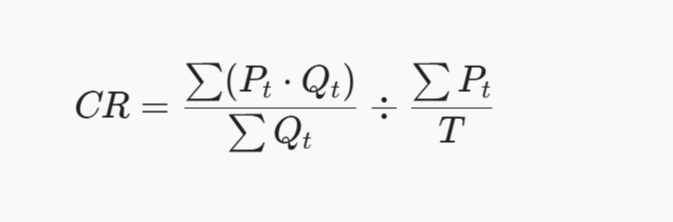
For unmanaged solar portfolios, CR frequently drops below 0.65 in mature European and North American markets. For wind assets, spatial correlation creates correlated production troughs, leading to severe volume risk when merchants are forced to buy back power in balancing markets at punitive prices to cover shortfalls.
The Evolution of PPA Structures: Moving Beyond Vanilla Contracts
Traditional fixed-volume, fixed-price PPAs transferred almost all volume and shape risk to the off-taker or supplier, who charged a heavy risk premium. As market volatility spiked, utilities and corporate buyers retreated from vanilla structures, giving rise to sophisticated hybrid contracting mechanisms.
Collar Structures and Price Floors in Practice
To balance bankability with upside exposure, Collar PPAs have gained immense traction. Under a collar structure, if the market price falls below a predetermined floor (Pfloor), the off-taker compensates the generator. If prices exceed a ceiling (Pceiling), surplus revenues are shared or rebated.
Real-Life Example: European corporate buyers (such as tech giants procuring green power) frequently utilize collar PPAs with Nordic wind developers. When wholesale power prices collapsed during negative pricing hours, the price floor protected the developer's debt service, ensuring projects remained solvent while still allowing the corporate off-taker to capture savings when prices hovered within target bands.
BESS Contracting Strategies: Unlocking Storage Monetization
Battery Energy Storage Systems operate under fundamentally different economic laws than generation assets. A BESS does not produce energy; it arbitrates time. Consequently, contracting a BESS requires aligning complex revenue stacking— including frequency containment reserves (FCR), automatic frequency restoration reserves (aFRR), capacity remuneration mechanisms (CRM), and energy arbitrage.
BESS Revenue Stacking & Risk Mitigation Matrix
- Ancillary Services (Fast Frequency Response): High initial yields in markets like ERCOT and PJM, but high saturation risk as grid demand stabilizes.
- Intraday Energy Arbitrage: Capitalizes on extreme midday-to-evening price spreads; directly benefits from high RES volatility.
- Capacity Markets / Availability Payments: Provides bedrock revenue floor to satisfy project finance lenders.
Tolling Agreements vs. Merchant Operations for BESS
Asset owners face a critical strategic choice: enter into a long-term Tolling Agreement with an energy trader/utility, or operate on a Merchant/Optimized basis.
- Tolling Agreement: The off-taker pays a fixed monthly availability fee for the right to dispatch the battery. The off-taker bears the commodity and spread risk, while the asset owner guarantees round-trip efficiency (RTE) and availability metrics. This provides stellar bankability.
- Merchant Optimization: Algorithmic dispatch platforms manage the battery in real-time across spot and ancillary markets.
Real-Life Example: In ERCOT (Texas), standalone 2-hour and 4-hour BESS assets operating on merchant optimization captured extraordinary windfall profits during Winter Storm Uri and subsequent summer heatwaves, with revenues exceeding 5-year payback projections in a single season. However, during milder shoulder months, merchant revenues can plunge near zero, demonstrating why lenders demand conservative tolling floors for long-term project debt.
Co-Located RES + BESS Hybrids: The Ultimate Hedge
The convergence of renewable generation and energy storage into co-located hybrid assets represents the most robust structural hedge against market volatility. By pairing solar PV with a BESS behind a single grid interconnection point, asset owners solve multiple structural inefficiencies simultaneously.
"Co-location transforms intermittent generation into dispatchable power. Instead of dumping solar power into a saturated negative-price market at midday, the hybrid plant stores the energy and injects it during the evening peak."
Key Advantages of Co-Located Hybrids
- Mitigation of Curtailment and Negative Pricing: Excess midday generation is captured by the battery rather than curtailed or penalized.
- Interconnection Cost Optimization: Sharing grid connection capacity (MWac) reduces per-MW interconnection expenses and avoids multi-year grid upgrade delays.
- Firm Power PPAs (Baseload RES): Enables the creation of "firm renewable PPAs," where the asset guarantees delivery of a specific volume at specific hours, commanding a significant price premium from corporate off-takers seeking 24/7 carbon-free energy (CFE).
Real-Life Example: Large-scale solar-plus-storage hybrid projects in the Western Australian SWIS and the US Southwest routinely capture over 25% higher portfolio revenues compared to standalone solar installations in the exact same meteorological zones, purely through intelligent clipping capture and time-shifted evening delivery.
Advanced Risk Management & Quantitative Modeling Frameworks
Navigating volatility requires moving away from static spreadsheets and embracing advanced stochastic modeling. At HelioExpect, our analytical frameworks integrate several quantitative layers:
1. Value at Risk (VaR) and Conditional Value at Risk (CVaR)
Standard deviation is inadequate for energy portfolios characterized by fat-tailed price spikes. CVaR measures the expected loss exceeding the $VaR$ threshold, providing risk managers with a clear metric for extreme tail-risk exposure in merchant portfolios.
2. Monte Carlo Simulation of Asset Dispatch
Simulating thousands of possible future price paths, wind speeds, solar irradiance profiles, and battery degradation curves allows developers to stress-test PPA structures under worst-case market clearing scenarios.
3. Real Options Valuation (ROV)
Traditional Net Present Value (NPV) often undervalues storage and hybrid assets because it assumes passive management. Real Options Valuation treats operational flexibility such as the option to delay charging, switch between ancillary services and energy arbitrage, or expand battery capacity as financial options, substantially boosting appraised project value.
Actionable Recommendations for Market Participants
To thrive in today’s volatile energy landscape, developers, IPPs, and corporate buyers must adopt a multi-faceted contracting and risk management playbook:
- Diversify Offtake Portfolios: Avoid over-reliance on a single PPA structure. Combine a baseline floor PPA for debt service with merchant exposure or flexible tolling for upside capture.
- Invest in Advanced Forecasting & Algorithmic Dispatch: Utilize cutting-edge analytics platforms like HelioExpect to optimize real-time bidding strategies across day-ahead, intraday, and balancing markets.
- Incorporate Strict Degradation & Warranty Terms in BESS Contracts: Ensure EPC and O&M contracts precisely define throughput limits, temperature controls, and cell replacement obligations to protect long-term asset value.
- Design for Optionality: When developing greenfield RES sites, secure land and grid rights that allow future BESS retrofitting or expansion.
Predictability as a Competitive Advantage
Volatility is an inherent characteristic of the modern energy transition. While it introduces severe risks for unprepared market participants, it simultaneously creates extraordinary profit pools for those equipped with sophisticated contracting strategies and robust risk management frameworks. By embracing hybrid asset configurations, flexible PPA structures like collars and tolling agreements, and advanced quantitative analytics, stakeholders can tame volatility and unlock sustainable, long-term value.
Ready to optimize your RES and BESS asset portfolio against market volatility? Connect with the analytics experts at HelioExpect.com to explore our proprietary forecasting and risk valuation tools.