Why is Your Solar Asset Underperforming? The Root Causes Behind the Yield Gap

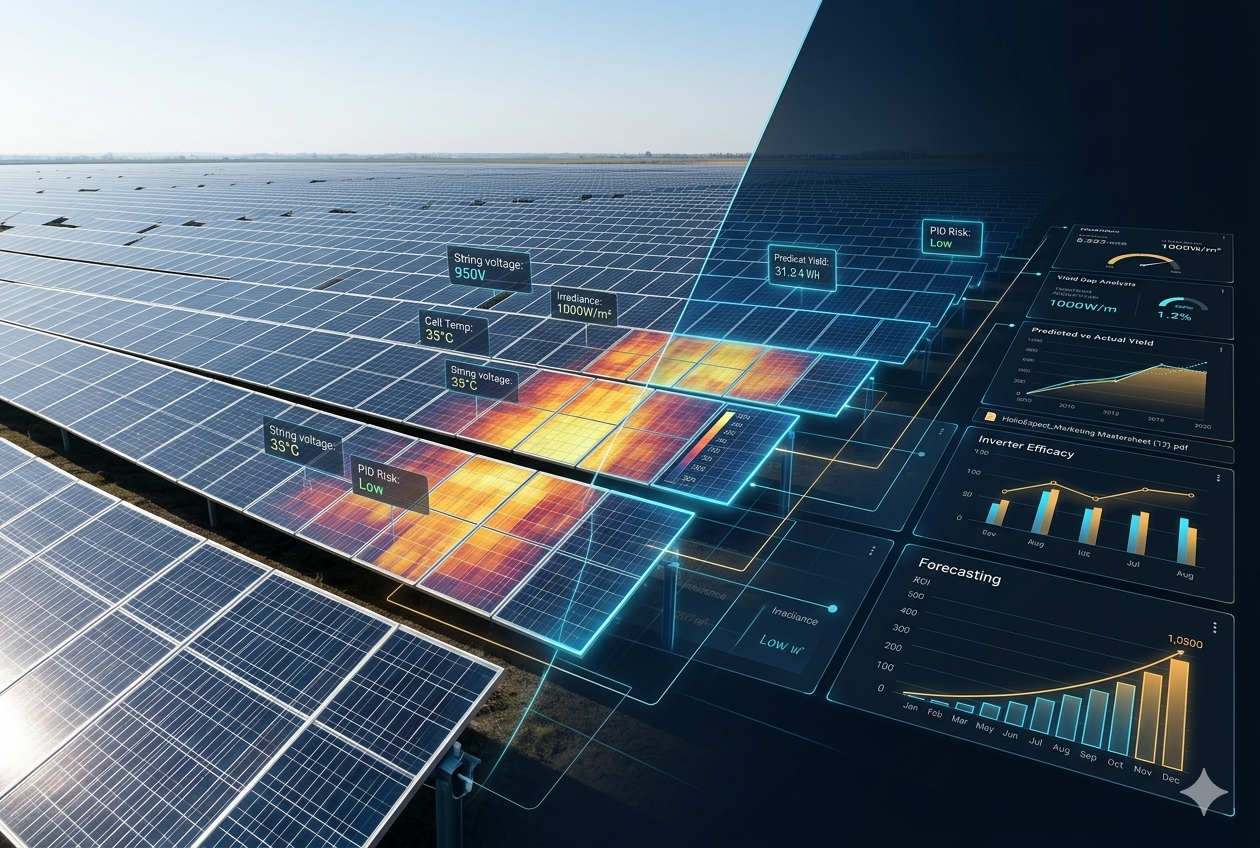
As global solar capacity continues to scale at an unprecedented rate, asset owners, O&M providers, and utility-scale investors are facing a quiet but costly reality: the solar yield gap.
You invest in a commercial or utility-scale photovoltaic (PV) system based on carefully calculated P90 engineering models, expecting a reliable return on investment (ROI). Yet, month after month, the actual data shows a frustrating deficit. Your megawatt-hours (MWh) are lagging behind projections, and the system is bleeding revenue under the radar.
At HelioExpect, we know that solar energy is only as predictable as the intelligence driving it. When a plant underperforms, it is rarely due to a single catastrophic event. Instead, it is usually a death by a thousand cuts.
In this comprehensive overview, we break down the primary root causes of PV underperformance.
The Core Drivers of PV Underperformance
1. Environmental & Soiling Losses
The most visible enemy of solar efficiency is right on the surface. Soiling losses, the accumulation of dust, agricultural residue, industrial pollution, and bird droppings create a physical barrier between solar irradiance and your photovoltaic cells.
- The Impact: Even a thin, uniform layer of dust can trigger a 15% to 25% drop in generation, particularly in arid or high-pollution zones.
- The Hidden Threat: Uneven dirt accumulation doesn't just block light; it alters current flow across strings, creating micro-shading conditions.
2. Shading and Micro-Shading
While major obstructions are typically cleared during the site assessment and design phase, the landscape changes over a 25-year lifespan.
- New commercial construction, growing vegetation, or newly installed rooftop HVAC units can introduce unexpected shadows.
- Because cells are wired in series, a shadow covering a tiny fraction of a single panel can cause an entire string’s output to collapse by 40% or more.
3. Thermal Losses and Local Climate Realities
Solar panels love light, but they hate extreme heat. Photovoltaic technology operates under a negative temperature coefficient. For every degree Celsius your PV modules rise above standard test conditions (25°C), their power generation capacity drops by roughly 0.4% to 0.5%. Without proper ventilation or climate-resilient component selection, scorching summers can severely choke your peak afternoon generation.
4. Advanced Component Degradation (LID & PID)
Not all performance drops can be cleaned away with water. Sub-surface electrical phenomena can quietly degrade your system from day one:
- Light-Induced Degradation (LID): Occurs naturally within the first few hundred hours of a panel's exposure to sunlight, dropping efficiency by 1% to 3%.
- Potential-Induced Degradation (PID): A much more severe threat. Triggered by high voltage differences between the solar cells and the grounded module frame (often exacerbated by humidity), PID causes a voltage leak. Left unchecked, PID can cause catastrophic performance drops of up to 50% over a few years.
5. Sub-optimal Engineering Design & Installation Shortcuts
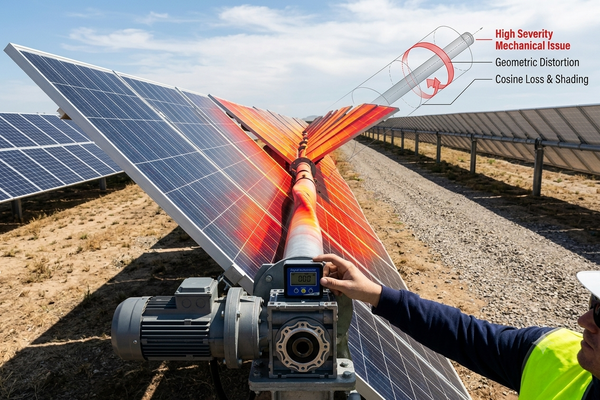
Sometimes, the root cause dates back to day one. Incorrect tilt angles, misaligned tracking systems, or poorly optimized inverter load ratios (ILR) limit the system's ability to capture global horizontal irradiance (GHI). Furthermore, rushed installations often lead to mismatched strings, loose electrical connections, and poor crimping, all of which introduce high resistance, energy loss, and severe safety risks like arc faults.
6. Inverter Inefficiencies & Grid Tripping
The inverter is the heart of your solar plant, responsible for converting DC power into usable AC power. When inverters experience frequent tripping due to grid voltage fluctuations, poor ventilation, or internal component aging, your uptime plummets. Without intelligent, real-time tracking of Maximum Power Point Tracking (MPPT) data, these micro-trips can slip past standard O&M checks unnoticed.
Reclaiming Your ROI: The Power of Advanced Forecasting
Identifying underperformance is impossible if your baseline expectations are flawed. Many operators compare performance against historical averages or rigid, outdated weather models.
This is where HelioExpect bridges the gap. By leveraging advanced solar forecasting, high-resolution satellite data, and predictive analytics, we provide precise, real-time irradiance modeling. We help you distinguish between a genuine system fault and a natural dip in solar resource availability, allowing your O&M teams to deploy targeted maintenance rather than playing guessing games.
Coming Soon: Our Deep-Dive Mini-Blog Series
Want to learn how to diagnose, mitigate, and completely reverse these efficiency drains? We are breaking these down one by one.
Stay Tuned: Because each of these variables demands a deep technical dive, this article serves as the anchor for our upcoming PV Performance Series. Over the next few weeks, we will launch a dedicated mini-blog for each root cause, delivering actionable solutions to reclaim your missing generation.